Ultrasound-Enhanced Solvo-Hydrothermal Synthesis of Metal-Free Carbon Catalysts for Eco-Friendly Visible-Light-Driven Oxidation
Abstract
This study examines the optimization of an ultrasound-assisted solvo-hydrothermal route for the synthesis of metal-free carbon materials and evaluates the role of sonication in the selective oxidation of the lignin-derived monomer coniferyl alcohol, an important precursor to high-value aromatic compounds. Sonication parameters applied during the preparation of the chitosan/lignin (C/L) system, including frequency, power, and irradiation time, were systematically varied to assess their influence on product yield, selectivity, and the structural and morphological properties of the resulting carbon materials. The as-prepared materials were characterized by X‑ray photoelectron spectroscopy (XPS), Fourier-transform infrared spectroscopy (FTIR), and scanning electron microscopy (SEM).
Photocatalytic performance was investigated through the visible-light-driven selective oxidation of coniferyl alcohol (ConOH) to ferulic acid in acetonitrile. Among the materials examined, the sample synthesized under sonication at 22 kHz for 2 h exhibited the highest photocatalytic activity, affording 22% conversion of coniferyl alcohol and 35% selectivity toward ferulic acid after 4 h of irradiation, together with the formation of 68 µmol of H2O2. The improved performance is attributed to the beneficial effect of ultrasound during the solvo-hydrothermal process, where acoustic cavitation is proposed to enhance mass transfer and promote pathways favorable to selective oxidation. In addition, the ultrasound-assisted method outperformed conventional preparation approaches by reducing processing time and improving product quality.
Overall, this work demonstrates that ultrasound is an effective tool for optimizing solvo-hydrothermal synthesis and provides a sustainable strategy for the preparation of metal-free carbon photocatalysts for the selective valorization of renewable feedstocks into fuels and other value-added products.
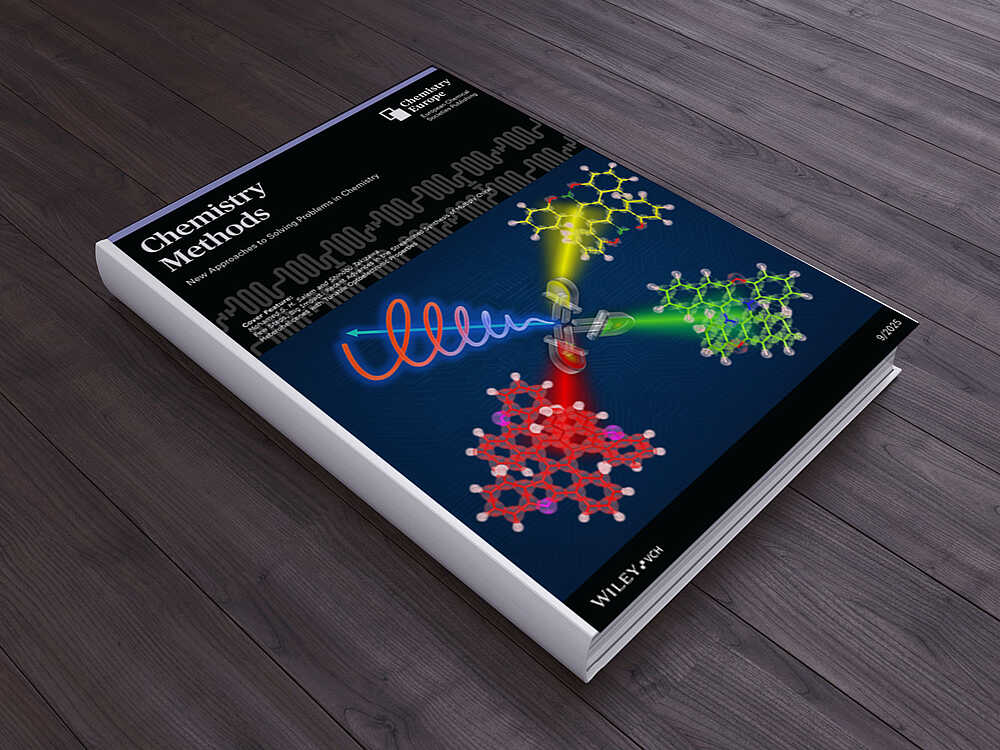
By: Ahmed Malek Djaballah, Behdokht Hashemi Hosseini, and Juan Carlos Colmenares. Chemistry — Methods. (2026), 6:e70154
DOI: 10.1002/cmtd.70154
First published: 25 August 2026
Article link: https://chemistry-europe.onlinelibrary.wiley.com/doi/10.1002/cmtd.70154

Sign-up for our science Newsletter