Sonication-induced catalytic approaches for PFAS degradation in aqueous systems
Abstract
Per- and polyfluoroalkyl substances (PFAS) are a large group of synthetic compounds that have raised global concern due to their extreme environmental persistence, bioaccumulation potential, and toxicological risks. Their widespread use in industrial and consumer products, combined with the exceptional stability of the carbon – fluorine bond, makes them highly resistant to natural degradation and difficult to remove by conventional treatment technologies. Among emerging destructive strategies, ultrasonication (sonolysis) has attracted increasing attention for PFAS degradation. This technique exploits acoustic cavitation the nucleation, growth, and violent collapse of microbubbles in aqueous systems creating localized hotspots of extreme temperatures and pressures. These conditions drive both pyrolytic and radical-mediated reactions that can effectively disrupt PFAS molecules, particularly at the gas – liquid interface where they accumulate due to their amphiphilic nature.
Beyond direct sonolysis, recent research underscores the synergistic role of catalysis in enhancing PFAS mineralization. Heterogeneous catalysts such as metal oxides, carbon-based composites, and perovskites can facilitate radical generation, improve energy efficiency, and promote surface-driven pathways for PFAS defluorination under ultrasonic fields. By contrast, homogeneous catalytic systems (e.g., transition metal ions and radical mediators) offer valuable mechanistic insights, though
often with limited recyclability. Looking forward, the integration of sonophotocatalysis combining ultrasonic cavitation with photocatalytic activation emerges as a highly promising avenue. While still scarcely explored in the open literature for PFAS, this hybrid approach may leverage synergistic charge transfer, enhanced radical formation, and interfacial accumulation effects to achieve deeper mineralization.
This chapter provides a comprehensive overview of PFAS degradation via ultrasound-assisted processes, critically examining the fundamentals, mechanisms, and performance. Operational parameters such as ultrasonic frequency, power density, reactor geometry, and solution chemistry are systematically discussed. Particular emphasis is placed on catalytic and hybrid sono-assisted pathways, situating them within the broader landscape of PFAS remediation. By integrating both theoretical principles and applied findings, this chapter highlights ultrasonication alone and in catalytic conjunction as a scalable, reagent-free, and versatile technology with strong potential for overcoming one of today’s most persistent environmental challenges.
Keywords:
PFAS degradation, Ultrasonication, Sonolysis, Acoustic cavitation, Advanced oxidation processes, Environmental remediation
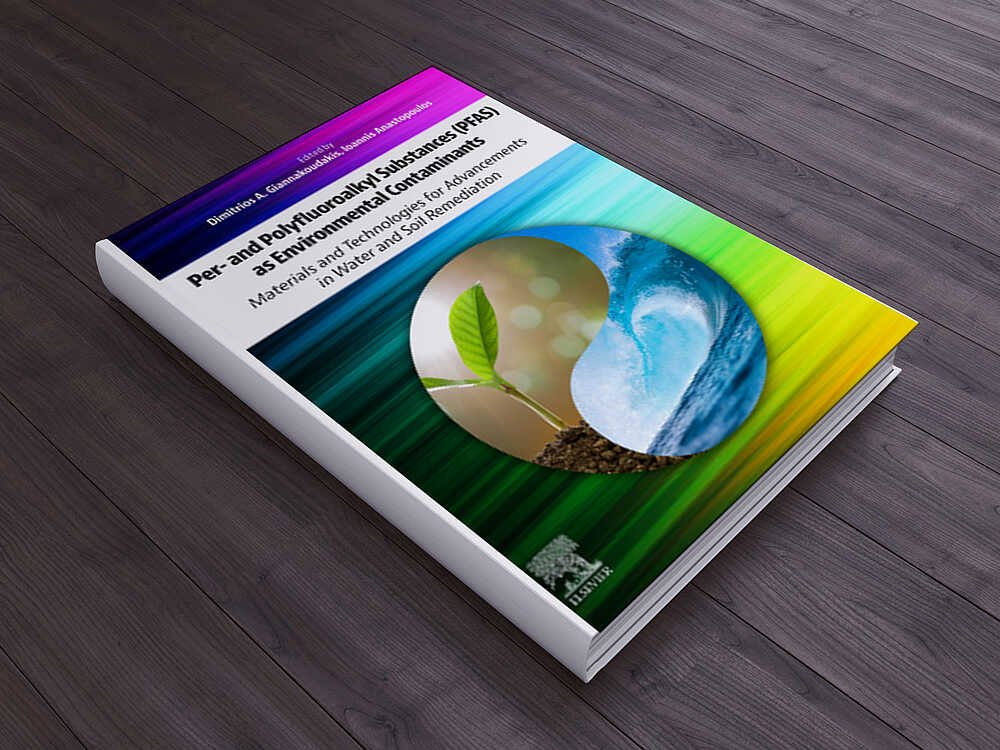
By: Ahmed Malek Djaballah, Dimitrios A. Giannakoudakis, Ioannis Anastopoulos, Giacomo de Falco, and Juan Carlos Colmenares. Chapter N° 7: Sonication-induced catalytic approaches for PFAS degradation in aqueous systems
Book: Per- and Polyfluoroalkyl Substances (PFAS) as Environmental Contaminants. Materials and Technologies for Advancements in Water and Soil Remediation.
Editors: Prof. Dr. Dimitrios A Giannakoudakis and Prof. Dr. Ioannis Anastopoulos
DOI: 10.1016/B978‑0 – 443 – 43856 – 1.00013 – 7
Published: August 20th, 2026
No. of pages (Paperback):704
Imprint: Elsevier
Language: English
Paperback ISBN: 9780443438561
eBook ISBN:9780443438578
Website of the book (our Chapter nr 7): https://shop.elsevier.com/books/per-and-polyfluoroalkyl-substances-pfas-as-environmental-contaminants/a‑giannakoudakis/978 – 0‑443 – 43856‑1
https://www.sciencedirect.com/science/chapter/edited-volume/abs/pii/B9780443438561000137?via%3Dihub

Sign-up for our science Newsletter