When Sound Met Light: Prof. Juan Carlos Colmenares Programmed Biomass Chemistry at PISC 2026
A Polish-funded research programme showed how sound, light, and smart catalysts had redirected biomass-derived molecules toward valuable chemicals and clean oxidants.
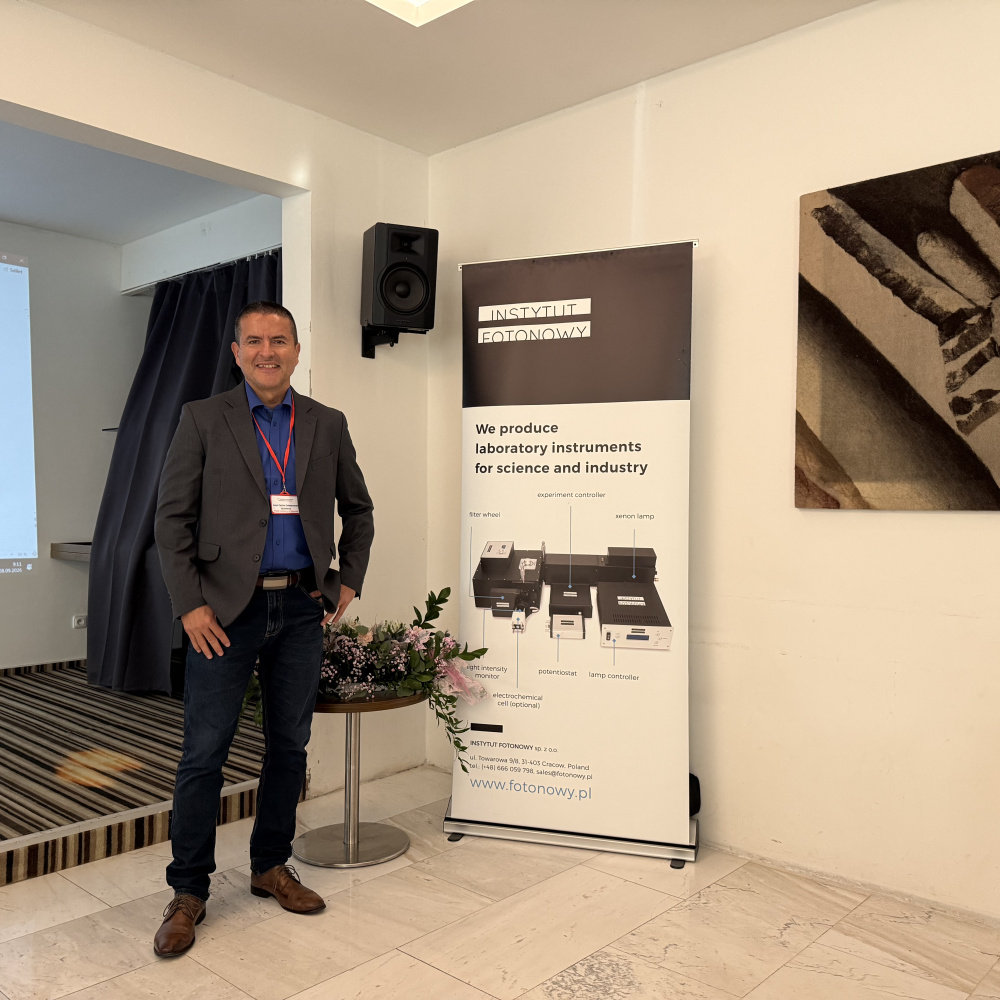
At the 17th Pannonian International Symposium on Catalysis, which was held from 7 to 11 September 2026 in Malá Morávka, Czech Republic, Prof. Dr. Juan Carlos Colmenares of the Institute of Physical Chemistry, Polish Academy of Sciences, delivered the oral presentation “Programming Biomass Valorization with Sound and Light.”
His message was both simple and disruptive: sound had not merely stirred a reaction, and light had not merely illuminated it. Together, they had formed a programmable chemical environment. Ultrasound had helped shape metal-free catalysts made from chitosan and lignin, controlled radical concentrations, and improved transport inside reactors. Visible light had then driven selective transformations toward ferulic acid, coniferyl aldehyde, diapocynin, and hydrogen peroxide. Continuous-flow systems had moved the concept closer to safer, scalable processing.
Why the meeting mattered
The work had been advanced through the National Science Centre (NCN), Poland, under OPUS-20 (2020/39/B/ST5/00076) and OPUS-26 (2023/51/B/ST5/00752). Rather than treating PISC 2026 only as a showcase, Prof. Colmenares had used it as a scientific matchmaking arena.
The programme had brought together precisely the complementary expertise his projects required: heterogeneous catalysis, photocatalysis, circular feedstocks, operando analysis, reaction engineering, and industrial scale-up. Disruptive progress had depended on such combinations: chemists who designed catalysts, physicists who mapped acoustic fields, spectroscopists who watched active sites work, engineers who built continuous reactors, and industrial partners who tested scalability.
By connecting Poland-funded research with this international catalysis community, the meeting strengthened the pathway from bold laboratory concepts to credible circular technologies that use waste-derived carbon, sound, light, and water instead of precious metals and harsh oxidants.
Conference website: https://pisc-conference.com/
Acknowledgments: This work is supported by the National Science Center (NCN) of Poland under the research projects OPUS 20 No. 2020/39/B/ST5/00076 (https://www.photo-catalysis.org/projects/nanoengineering-of-multicomponent-metal-free-carbonaceous-materials-for-bio-oil) and OPUS 26 No. 2023/51/B/ST5/00752 (https://www.photo-catalysis.org/projects/novel-method-for-the-transformation-of-natural-polymers-into-valuable-porous).

Sign-up for our science Newsletter